Overview: The Icon of the 90s Japanese Performance Era
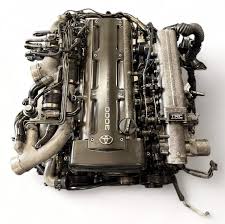
The 2JZ-GTE is a 3.0-liter inline-6 cylinder, twin-turbocharged engine found in the Toyota Supra (A80 chassis), specifically the JDM (Japanese Domestic Market) models from 1993-2002. The 1998 model year represents a later, refined version of this iconic powerplant.
Its reputation was built on an almost mythical combination of smooth, responsive power and unbelievable strength.
Key Specifications & Features (JDM 2JZ-GTE)
-
Displacement: 3.0 liters (2997 cc)
-
Configuration: Inline-6, DOHC, 24-valve
-
Block Material: Cast Iron – This is the single most important factor for its strength.
-
Head Material: Aluminum
-
Aspiration: Sequential Twin-Turbochargers (CT12 x2)
-
Fuel System: Electronic Fuel Injection (EFI) with a distributor-less direct ignition system.
-
Compression Ratio: 8.5:1 (relatively low, ideal for forced induction)
-
Power Output (JDM): 280 hp (206 kW) at 5600 rpm (Gentlemen’s Agreement limited)
-
Torque Output (JDM): 435 Nm (321 lb-ft) at 3600 rpm
The “Sequential Twin-Turbo” System: The Masterpiece
This is the engineering marvel that defines the 2JZ-GTE’s driving experience.
-
How It Works:
-
Low RPM (up to ~3500 rpm): Only the first, smaller turbo operates. This provides quick spool-up and eliminates turbo lag, giving strong low-end and mid-range torque.
-
Mid RPM (~3500-4000 rpm): As exhaust pressure builds, a vacuum-actuated valve (the “EFI” actuator) opens, diverting exhaust gases to the second, larger turbo. Both turbos spool together.
-
High RPM (4000+ rpm): The system switches entirely to the second, larger turbo, which provides the top-end power.
-
-
The Result: A turbine-like power band that is incredibly smooth and feels naturally aspirated, with virtually no lag. The transition is noticeable as a “surge” of power around 4000 RPM.


Reviews
There are no reviews yet.