
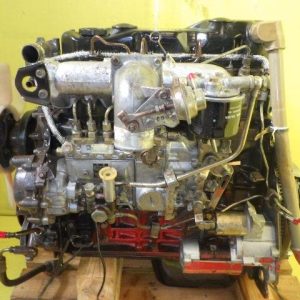
In-Depth Look at the J07C Engine
The J07C is a modern, turbocharged diesel engine designed for commercial duty, where reliability, fuel economy, and longevity are paramount.
Key Specifications & Features:
-
Engine Family: J07C
-
Displacement: Typically 7.0 liters (6871 cc). There are also smaller variants like the 6.0L and larger ones, but the 7.0L is common in the Ranger series.
-
Configuration: Inline-6 cylinder, DOHC, 24 valves.
-
Aspiration: Turbocharged and Aftercooled/Intercooled.
-
Fuel System: Common Rail Direct Injection with Electronically Controlled Unit Injectors.
-
Power Output: Varies by tune and application, but commonly in the range of 220 – 270 horsepower.
-
Torque Output: A massive 650 – 800 Nm, delivered at low RPMs for pulling heavy loads.
Why these features matter for a truck:
-
Inline-6 Configuration: This is the ideal layout for a commercial diesel. It is inherently balanced, leading to smooth operation and reduced vibration, which is crucial for component longevity.
-
Common Rail Direct Injection: Provides high injection pressure for fine atomization of fuel, leading to efficient combustion, good power, lower emissions, and improved fuel economy.
-
Electronic Control: The engine is managed by a sophisticated ECU that optimizes performance, fuel delivery, and emissions in real-time. This is a world away from the mechanical simplicity of a Hilux 2L.
Strengths of the Hino Ranger with J07C
This combination is built for one purpose: making money through reliable, efficient service.
-
Exceptional Durability and Longevity: Hino is renowned for building over-engineered, robust engines. The J07C is designed for a “million-mile” service life with proper maintenance. Its internal components are built to withstand decades of heavy use.
-
Massive Low-End Torque: The huge torque output available at low RPMs is what allows these trucks to pull heavy loads from a standstill with ease, whether it’s a loaded dump body, a refrigerated box, or a flatbed.
-
Good Fuel Economy (for its class): The efficient common-rail system and intelligent engine management make the J07C competitive in terms of fuel consumption for a medium-duty truck.
-
Advanced Emissions Control: To meet modern emissions standards (like JP05 in Japan), later J07C engines are equipped with:
-
Exhaust Gas Recirculation (EGR)
-
Diesel Particulate Filter (DPF)
-
Selective Catalytic Reduction (SCR) with AdBlue/DEF fluid.
This makes them cleaner but adds complexity.
-
Common Problems and Weaknesses
The issues here are typical of modern, heavy-duty diesel engines and are often related to the emissions control systems.
-
Emissions System Problems (The Big One):
-
DPF Clogging: If the truck is used predominantly for short, low-speed trips, the DPF cannot regenerate (burn off soot) properly. This leads to power loss, forced regeneration cycles, and very expensive cleaning or replacement.
-
SCR/AdBlue System Issues: Faulty NOx sensors, DEF injectors, or catalyst issues can trigger warning lights and derate the engine (severely reduce power) to protect it.
-
EGR Cooler Clogging/Leaking: The EGR system can become clogged with carbon, and the EGR coolers are known to be prone to cracking and leaking coolant.
-
-
High-Pressure Fuel System Issues:
-
The common-rail system and unit injectors are extremely precise and expensive. Contaminated fuel (dirt or water) is a primary cause of failure. Fuel filter changes are critical and must not be neglected.
-
-
Turbocharger Wear:
-
Given the hard working life of these trucks, the turbocharger is under constant stress. Seal wear and bearing failure can occur, especially if oil change intervals are stretched.
-
-
General Wear and Tear:
-
These are work trucks. Expect wear on clutches, brakes, and suspension components. The cab and body can also show significant wear depending on their use.
-



Reviews
There are no reviews yet.